
Data Science on the Move
Introduction
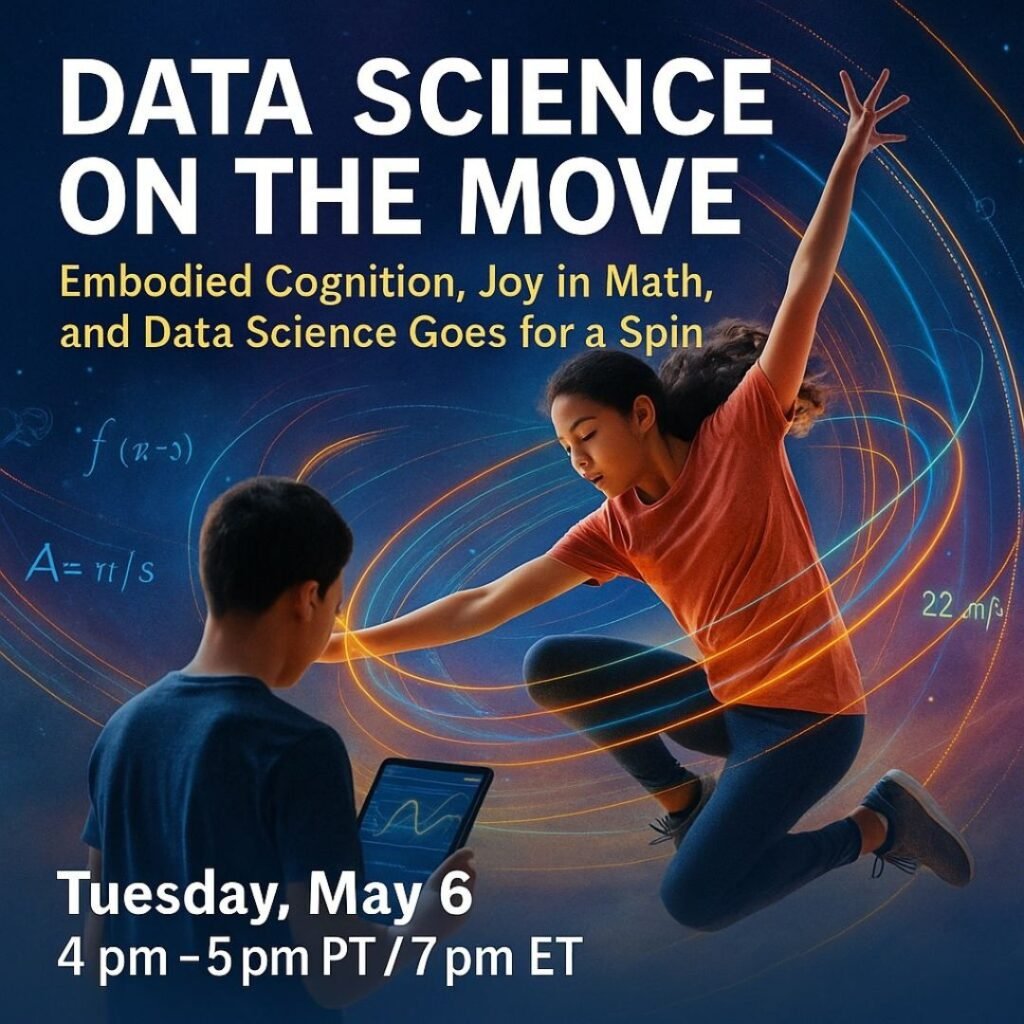
We recently held an online workshop with the TGR Foundation that highlighted Embodied Cognition, a pedagogy that emphasizes the powerful role of movement in how we learn. Jason Morgan, a DoDSTEM Ambassador shares remarkable personal experiences and experiences from his math and data science classroom.
The workshop is moderated by Eric Moore, VP of Programs at TGR, who takes a few minutes to introduce TGR programs and resources that are available for educators, and recognizes the support and funding from DoDSTEM for the DoDSTEM Ambassador program operated by TGR.
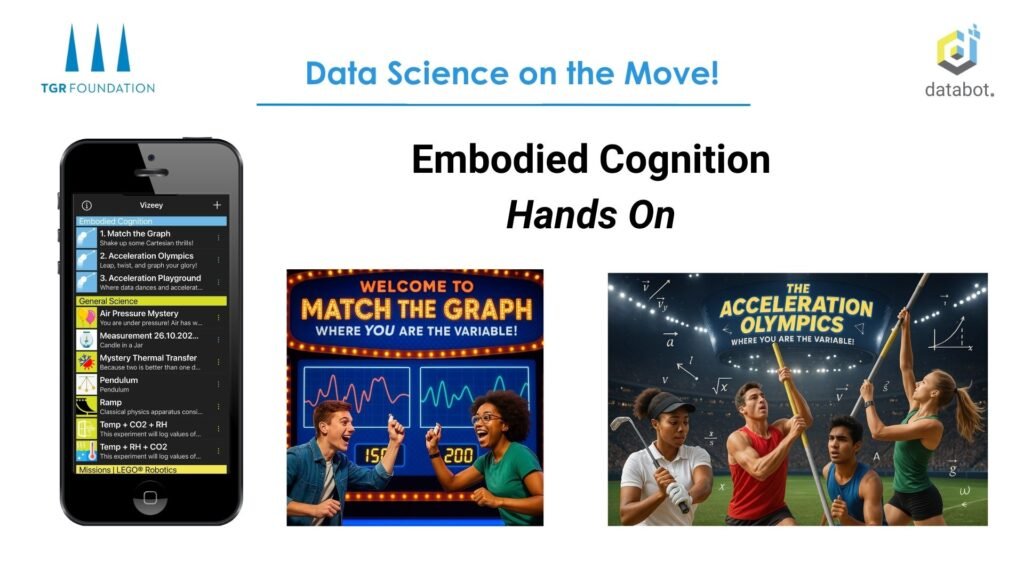
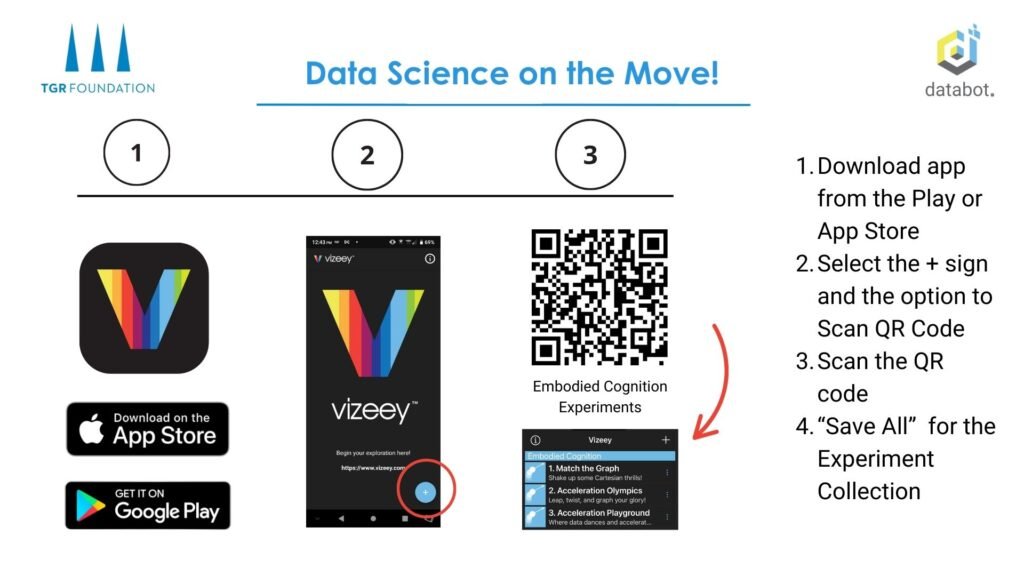
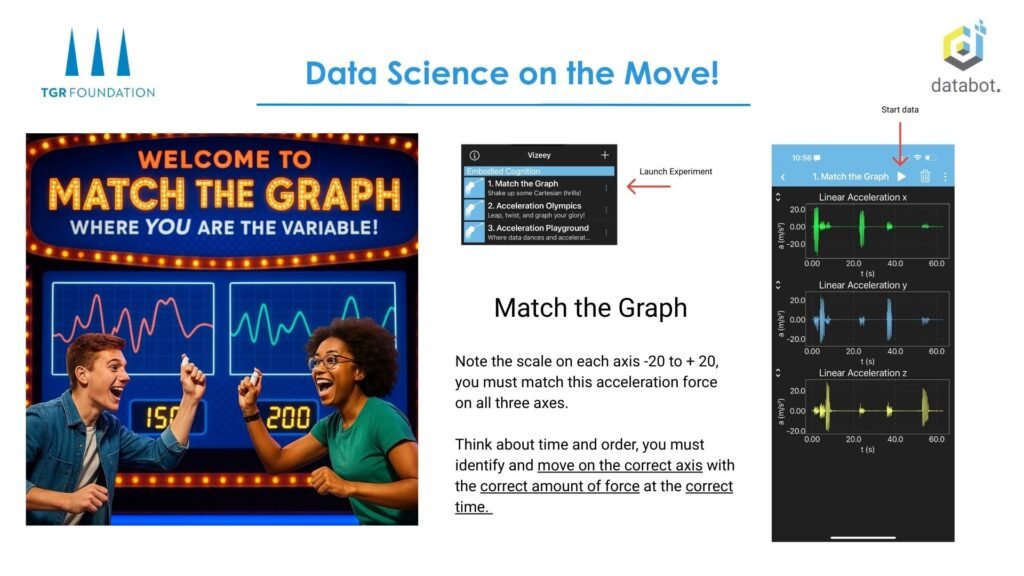
This workshop includes a crash course on using the databot Vizeey app and accessing the accelerometer on your smart device for some exciting hands-on activities you can do in your classroom right away with only a smart device – tablet, phone, whatever you have!
Workshop Link: Embodied Cognition Use Password: =S%uDU2J
How to Conduct this Activity in Your Classroom
Watch the workshop to see these activities explained in more detail. The following slides from the presentation show you how you to install the Vizeey app and conduct these activities with your students.
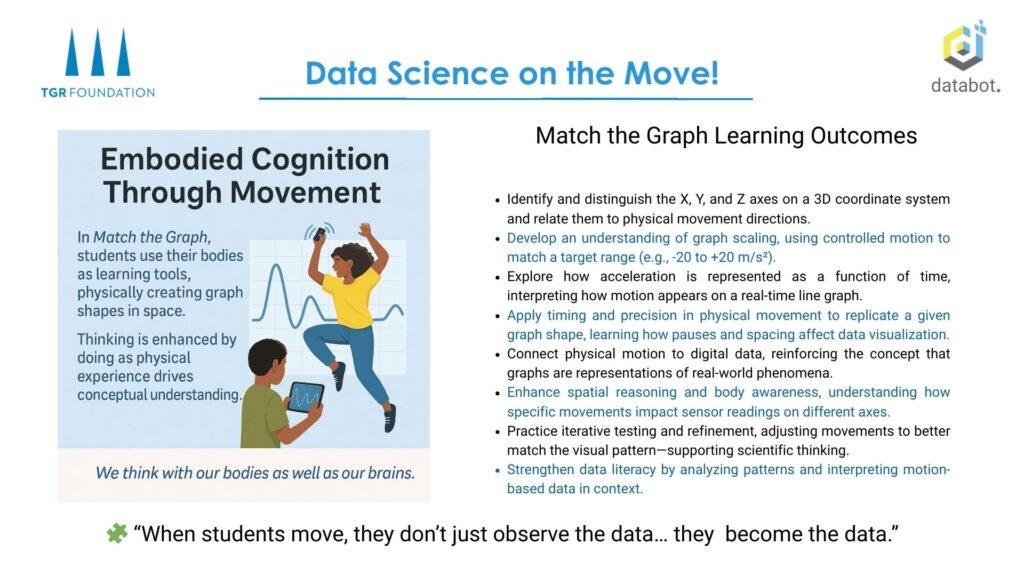
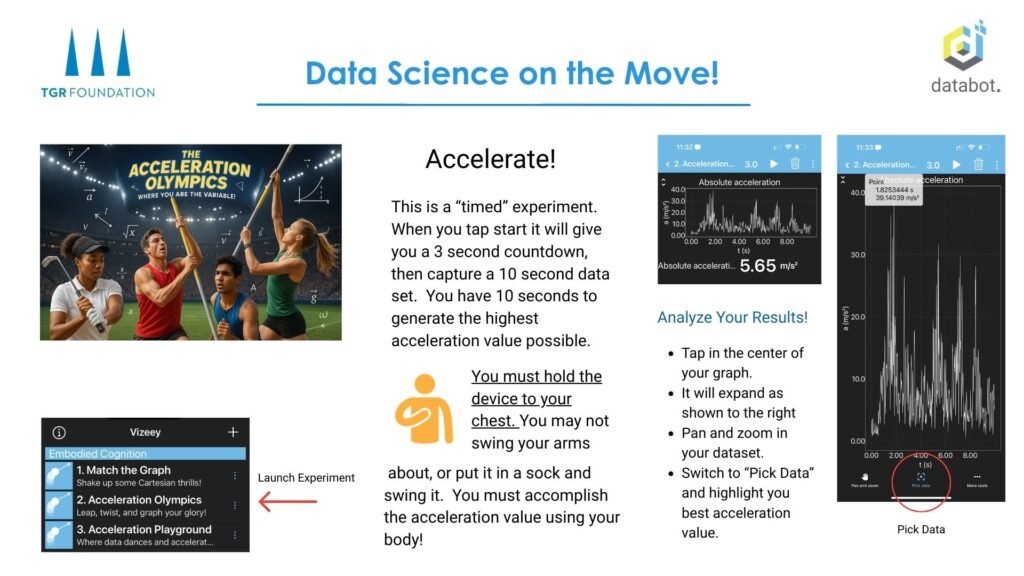
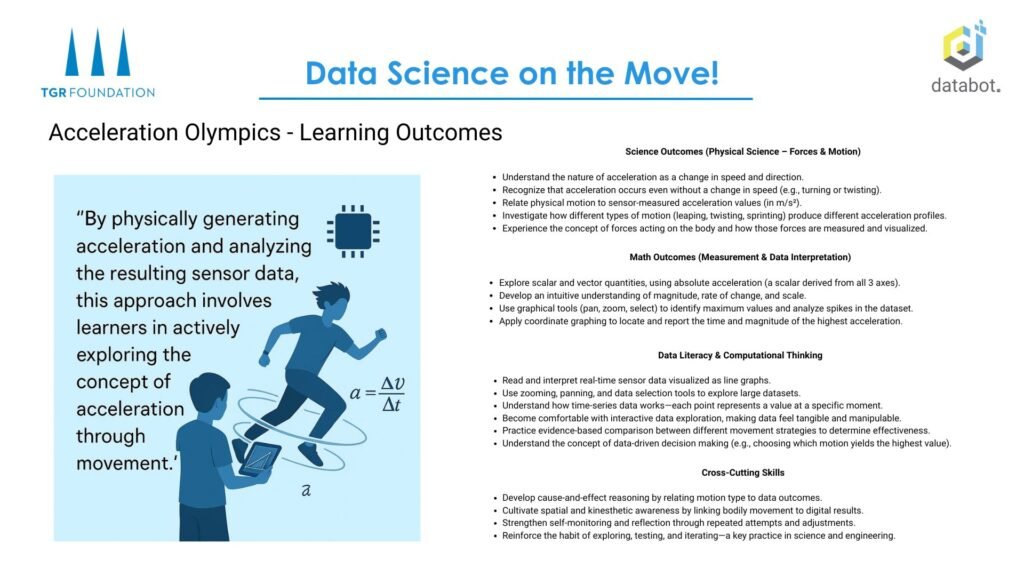
More on Embodied Cognition
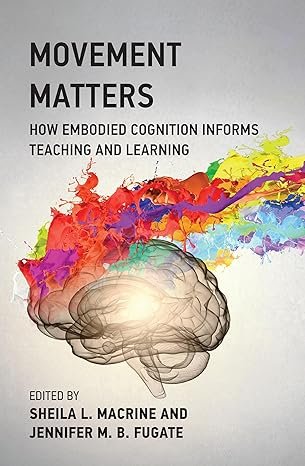
If you participated in our recent virtual workshop on embodied cognition, you explored how movement and physical interaction may support student understanding—especially in math classrooms and through hands-on activities with databot. For those who want to explore this topic further, Movement Matters is a valuable resource.
This book brings together researchers from neuroscience, psychology, and education to explain how learning is shaped by the body’s interaction with the world. It covers how these ideas apply to reading, STEM subjects, emotional development, and digital learning tools. The section on math instruction includes examples of research examining how gestures and physical movement can support students in understanding abstract mathematical concepts.
Whether you’re interested in the theory behind embodied cognition or looking for practical ways to apply it in your classroom, Movement Matters provides clear, research-based insights.
Here is the Amazon link to the book (no affiliate connection), explore this remarkable work and please contact us if you’d like more information on databot and our activities that embed embodied cognition.
Peer Reviewed Research
The research base supporting embodied cognition suggests that purposeful movement, gesture, and physical interaction can improve mathematical understanding, particularly for conceptual learning, spatial reasoning, proportional reasoning, and retention. While outcomes vary across studies and implementations, the overall body of research indicates that movement can be a productive component of mathematics instruction when tightly connected to the mathematical ideas being learned.
- Boaler, J. (2022). “Seeing Is Achieving: The Importance of Fingers, Touch, and Visual Thinking to Mathematics Learners.” In Movement Matters: How Embodied Cognition Informs Teaching and Learning. This chapter summarizes neuroscience and mathematics education research showing that finger use, gesture, touch, and movement are not distractions from mathematical thinking but are integral to mathematical cognition.
- Tran, C., & Nathan, M. (2017). “Support of Mathematical Thinking Through Embodied Cognition.” This peer-reviewed review paper summarizes decades of research on manipulatives, gestures, and whole-body movement in mathematics learning and discusses evidence that bodily actions can improve conceptual understanding.
- Way, J. (2024). “Embodied Learning in Early Mathematics Education.” This review concludes that there is a substantial body of evidence showing embodied learning approaches can enhance mathematics learning and argues for broader classroom implementation.
- Abrahamson (multiple studies) is another researcher worth mentioning. His research has provided evidence that carefully designed movement-based tasks can support the development of proportional reasoning, geometry concepts, and algebraic thinking. His work is widely cited within the embodied cognition literature.