Introduction
Welcome, and thank you for your interest in using databot in grant-funded STEM programs. This resource page is designed to support educators, coordinators, and grant writers who are seeking funding specifically for databot-based classroom, afterschool, or professional learning initiatives.
The materials below are not a general guide to grant writing. Instead, they provide databot-specific support, including research citations, example use cases, budget language, and sample narrative text that can be adapted directly into grant proposals. These resources are intended to save time, strengthen alignment to STEM priorities, and help clearly communicate the instructional value of databot to funders. If you need additional information or customized support, the databot team is available to assist.
Resources to Help You with Your Application
Research Compilation – Why Sensors?
This research report compiles decades of peer-reviewed studies and classroom evidence demonstrating the impact of sensor-based learning (probeware) in K–12 STEM education. It shows that hands-on data collection improves student understanding of science concepts, increases engagement, strengthens science process skills, and leads to measurable learning gains. The report draws on research from elementary through high school classrooms and across disciplines such as physics, chemistry, biology, earth science, and mathematics, consistently finding that real-time data and visualization help students connect abstract ideas to real-world phenomena and support inquiry-based learning.
The report also connects this research to current instructional priorities, including alignment with the Next Generation Science Standards (NGSS) and Science and Engineering Practices. It highlights how affordable, multi-sensor tools like databot make this evidence-based approach accessible in diverse settings, including schools with limited resources and informal STEM programs. For grant writers, the report serves as a concise evidence source to justify investments in sensor technology by demonstrating instructional effectiveness, equity of access, and strong alignment with STEM, data literacy, and workforce readiness goals.

Research Compilation – Live Data Collection vs. Simulations?
This research brief synthesizes education studies comparing live data collection with virtual science simulations in K–12 classrooms. The findings show that students develop deeper conceptual understanding, stronger data literacy, and higher engagement when they collect and analyze real-world data themselves. While simulations are useful for introducing concepts and visualizing invisible processes, research consistently finds that learning is stronger when students work with authentic data that includes variability, uncertainty, and measurement limits. Live data experiences more closely reflect how science is practiced and strengthen students’ ability to reason from evidence.
The report also emphasizes that simulations are most effective when used alongside, not instead of, hands-on investigations. When students combine simulations with live sensor-based data collection, they move from observing idealized models to explaining real-world evidence. This approach supports key instructional goals, including NGSS Science and Engineering Practices, data literacy, and student engagement. For grant writers, the report provides clear research-based justification for investing in live data tools like databot, showing that authentic data experiences lead to stronger learning outcomes than virtual simulations alone.

Budgeting and Pricing Information
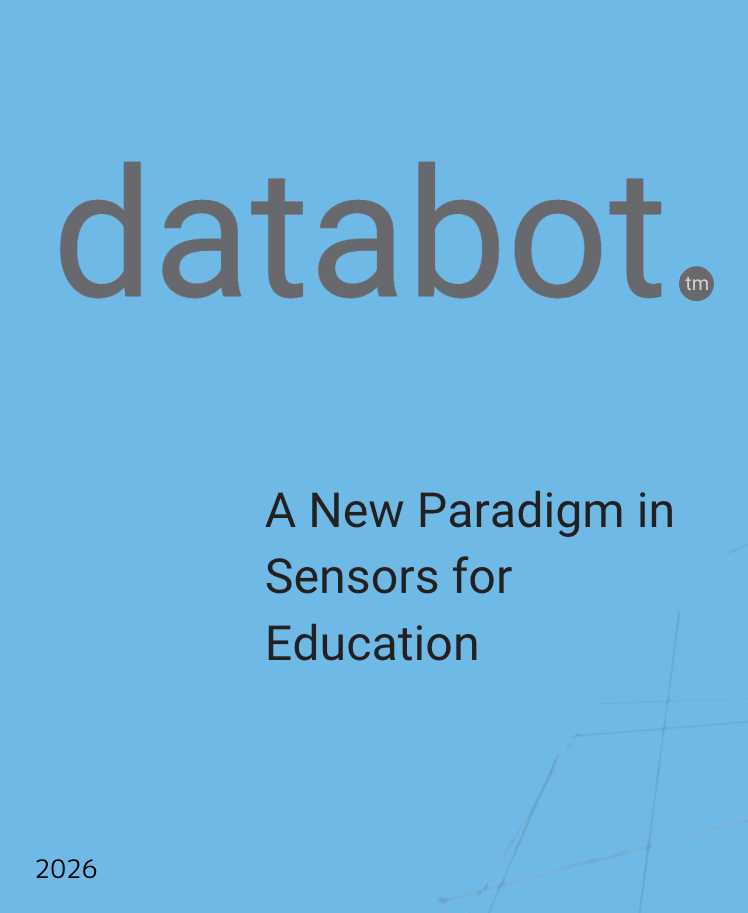
This databot pricing guide outlines available products, bundles, and included resources to help grant writers build clear, realistic STEM budgets. It details what is included with each databot purchase—such as built-in sensors, software access, curriculum resources, and support—so reviewers can easily understand the full instructional value of the investment. The guide also presents class packs and bundles designed for classrooms, after-school programs, and summer learning, allowing proposals to scale appropriately based on student enrollment and instructional goals.
For coding and computer science programs, it is recommended to budget one databot per student device (for example, one per Chromebook or computer), allowing students to work independently and at their own pace; optional monitor clips allow databot to attach directly to the system being used for coding. For in-class or after-school science and math activities, a one databot per two students model is recommended to support paired investigations. As an example, a class of 26 students would typically budget for 13 databots for student pairs, one for teacher demonstrations, and two for longer-running classroom experiments (16 total). These guidelines can be used directly when preparing grant budgets, and the databot team is available to assist with planning or questions.
The databot presentation slide deck is a complete Canva-based resource designed to help educators and grant writers clearly communicate the scope and value of databot-supported STEM programs. The deck provides in-depth overviews of databot capabilities, including sensors, software, curriculum resources, and supported learning environments. It also highlights how databot is used across science, coding, data science, and interdisciplinary STEM applications, making it a useful reference when developing proposal narratives, presentations, or stakeholder briefings.
The appendix of the slide deck includes 18 classroom case studies showing databot in use across a wide range of grade levels, from early elementary through high school. These examples illustrate real instructional models, classroom setups, and learning contexts that can help reviewers visualize how databot is implemented in practice. The core Canva file is available upon request for those who would like to adapt slides into their own presentations, and educators are also welcome to screen capture content as needed for grant proposals, reports, or presentations.
Additional materials can be found in the databot blogs which feature a variety of specialized applications, use-cases, teacher interviews, and more.
Project Ideas and Abstract Examples
Most grant applications require a short project abstract or overview that provides reviewers with a clear, concise summary of the proposed work. These sections are often limited to a set character count and are designed to quickly communicate the purpose, audience, and instructional focus of the project. When proposing a databot-supported initiative, there are many effective ways to frame your project based on subject area, grade level, and learning goals.
databot supports a wide range of instructional uses across STEM disciplines. Technology and computer science proposals may focus on physical computing, coding, Internet of Things (IoT), or introductory machine learning, with students beginning as early as grade 4 using block-based environments such as MicroBlocks. Science proposals can emphasize hands-on investigations in elementary and middle school classrooms using databot’s onboard sensors across earth science, chemistry, physics, and life science. Environmental science projects are supported by sensors for air quality (CO₂ and VOCs), humidity, light, temperature, sound intensity, UV index, and air pressure. Mathematics projects can highlight real-time data collection to support data visualization, modeling, and analysis. Data collected with the included Vizeey app can be exported to tools such as Desmos, CODAP, Excel, Numbers, or Google Sheets, or livestreamed directly for immediate analysis. The sample project overviews below illustrate different ways these capabilities can be summarized effectively for grant applications.
Elementary Science
This project brings live sensor data collection and analysis to the elementary classroom using databot, an easy-to-use multi-sensor device. databot, and the included software, provide quick and easy access to a variety of scientific explorations that can significantly improve student comprehension of science concepts. Online PD and support is included.
Shared School Resource
This project brings databot to our school resource center for all of our teachers. databot is highly versatile for teaching coding, science, technology, and math. Sensor games will facilitate lively STEM experiences on our annual STEM night, science explorations will be much more engaging, and our coding club will explore a variety of topics.
Out of School Hours
This project brings thrilling interactions with live sensor data to out-of-school students. databot, a multi-sensor tool, includes 16 sensors and activities that get students leaping, spinning, and cavorting as they explore science topics! Students move like Ninjas, whirl like tops, dance the limbo, and more in this fun-filled program.
High School Science
This project aims to implement databot in a high school physics course as an alternative to traditional probeware. I plan to create and test ten student labs to support our district (state) standards. If successful, I will share this material with educators statewide, potentially saving schools tens of thousands of dollars in traditional probeware purchases.
Environmental Education – Green Teams
This project will provide databot resources and hardware to our Green Team students who are developing various projects throughout our district supporting sustainability objectives. Projects range from inventorying trees on school campuses to air quality studies in the classroom.
Coding and Robotics: IOT
This project will provide databot coding resources to our High School coding program, providing the technology we need to provide hands-on IOT training. databot is an all-in-one device that can collect a variety of sensor information and easily publish it to a number of IOT services using the included coding resources.
LEGO Robotics
This project expands our LEGO® Robotics program through the addition of databot resources. The State of Idaho owns a license to the databot Missions with LEGO® Robotics curriculum which significantly increases our student exposure to data collection and application. The eight missions provide direct ties to workplace skills and applications.
K12 Data Science
Data Science is one of the fastest growing career tracks in the world. The ability to understand and interpret data in everything from business to the environment to political polls requires a strong foundation in data literacy. This project introduces K12 students to the basics of data science using engaging, real-time data collected using databot.
Curriculum and Lesson Samples
This section provides an overview of a wide variety of free lesson and curriculum samples designed to help educators and grant reviewers clearly understand how databot is used in real instructional settings. In addition to the free library and resources, there are two premium titles (LEGO and Summer Camp) that may fill certain needs. These materials span classroom, after-school, and out-of-school learning and are intended to illustrate both entry-level access and long-term instructional pathways. All samples are classroom-tested and aligned to common science, technology, and data literacy goals, making them suitable for inclusion in grant proposals, pilots, or program planning.
Resources that are included with databot begin with Sensor Starters—introductory lessons that focus on a single sensor and guide students through what it measures, how data is collected, and how it connects to real-world phenomena. A sample Middle School Science Lab is also provided from a growing library of 25+ labs covering evergreen topics across Physical Science, Earth Science, and Life Science. Coding Starters include 50+ lessons that progress from beginner drag-and-drop activities, such as turning on a light or buzzer, to reading sensors, building IoT solutions, and integrating with external hardware, AI vision systems, app builders, and more. Additional examples include Drone Missions, LEGO Robotics missions, Summer Camp out-of-school experiences, and a K–12 data science example. To support lesson design and standards alignment, GPT-powered AI lesson generators are also available to help educators brainstorm, adapt, and build lessons that connect directly to their classroom goals and curriculum requirements.
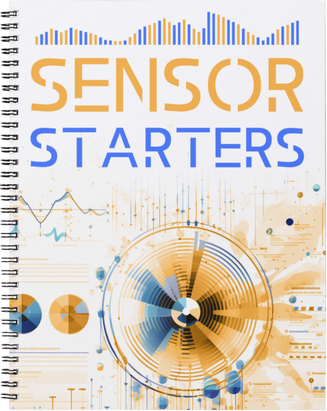
Sensor Starters – databot “boot camp” that introduces you to all the onboard sensors and the accompanying science through quick, engaging activities. Learn about each sensor, where it is located on databot, how it is used in the real-world, and more.
Middle School Labs – a growing library of 25+ labs covering evergreen topics across Physical Science, Earth Science, and Life Science. Acceleration carts, photosynthesis, the speed of sound, and much more!
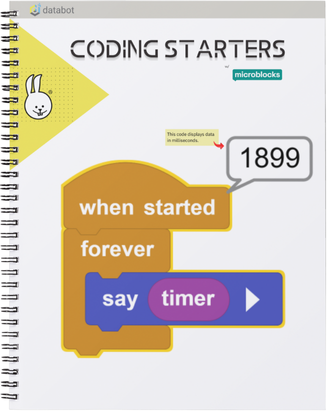
Coding Starters – 50+ lessons that progress from beginner drag-and-drop activities, such as turning on a light or buzzer, to reading sensors, building IoT solutions, and integrating with external hardware, AI vision systems, app builders, and more.
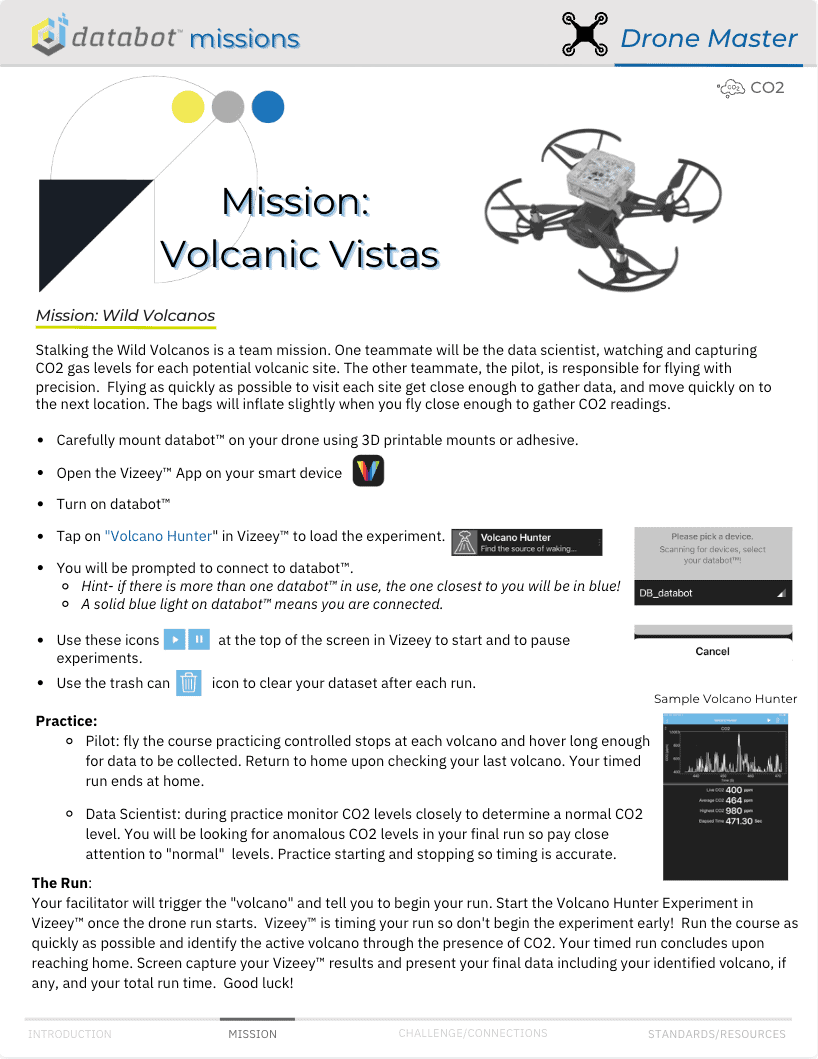
Technology – Drone Missions. Check out this amazing sample mission in which students use drones and live data to identify a dangerous, awakening volocano!
GPT – AI Lesson Generators